The solar panel frame was custom built
my me and my Father. It is stationary and
does not track the sun. ( The reason for not buying a panel mount kit
and
tracking system was cost, I could not afford it). We used alot of
channel and angle iron and
welded it together to form a base and then a separate top section to
hold the four panels. The main feature of the frame is that the top
section is hinged to the bottom base. The reason for this is because I
needed to change the angle of the panels in relation to the sun during
the year. Here is a picture so help visualize how the suns angle
changes throughout the year.
This picture is complements of
http://www.redrok.com/
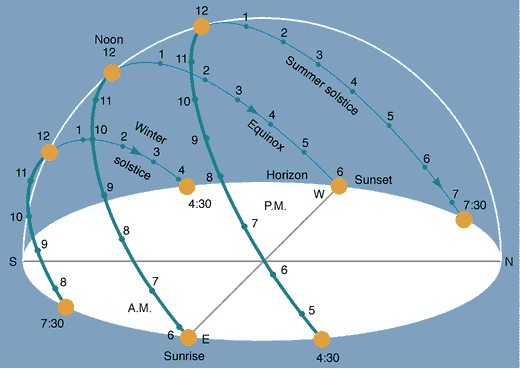
For my location, I am at about 35 degrees lattitude. It is recommended
to tilt your panels to equal your lattitude and then for winter months
add 15 degrees to the tilt and in Summer Subtract 15 degrees from the
tilt. My panel frame allows for this adjustment so in October I
adjusted the tilt to 50 degrees (35 + 15) because the sun is lower in
the sky and in mid spring I will adjust it to 20 degrees (35 - 15 )
because the sun will be higher in the sky. The idea is to keep the
panels perpendicular to the sun.
The other factor to take into
consideration is Solar Noon. Solar noon is basically the highest point
in the arc of the sun during a day(around noontime). The only issue is
that at 12:00 pm (lunchtime) the sun is not necessarily at its highest
point in the arc. It also may be way off if your area uses Daylight
Savings time since the time would be off by an hour. The reason why
finding "your" Solar noon is so important with regard to solar panels
is because you want your panels to be oriented as perpendicular as
possible to the sun (especially when the panels are stationary and NOT
on a tracker as in my case). If you take a look again at the
picture above you see that the arc is lower or higher in the sky
depending on time of year. I took this into account when adjusting the
angle of the panels on their hinge (the hinge can be seen on a picture
later on this page). Now I had to take into account at what time solar
noon is so I can orient the entire steel frame that hold my panels so
that the whole frame would be perpendicular to the highest point in the
suns arc. Solar noon, not really meaning the time that solar noon
occurs but meaning the point in the sky that the sun will be year round
and at the same time be perpedicular to my panels will never change.
So, I will never have to reorient my panel frame again.
The easiest way I found solar noon is this. I went to
http://earth.google.com/
and downloaded google earth and then installed it. I used google earth
to find my house and with google earth I was able to get almost exact
coordinates of longitude and lattitude for where I wanted my panels to
sit on the ground. I got those coordinates and then went to this
website
http://solar-noon.com/
and then entered my exact coordinates. I clicked Display Calendar and
then it gave me the calendar for the whole year. I picked a day on the
calendar and wrote down the time it displayed. On that day (5 minutes
before the Solar Noon time) I ran outside with a straight 3 foot long
stick, jabbed it into the ground (as straight up and down as I could
get it) where I had planned to put the panels
and waited until solar noon. I had to remember about daylight savings
time at this point and remeber to add back or take away an hour to get
true EST (Eastern Standard Time). If not then I woudl be and hour early
or and hour late for solar noon. Right at solar noon (looking at
my watch) I watched the shadow from the stick. I drew a line in the
dirt right on top of the shadow that the stick made on the ground and
this line represents true north to south. I then took a carpenters
framing square and lined it up with the shadow line and drew another
line perpendicular to the previous (solar noon) line and this second
line represents true east to west. Now I have a big X on the ground
oriented with true solar noontime and true solar south direction. Using
this information I was able to line the front of the solar panel frame
with the true solar east to west line so that the panels are lined up
exactly perpendicular to solar south direction.
You can also go to the following website to get solar noon.
http://www.srrb.noaa.gov/highlights/sunrise/sunrise.html
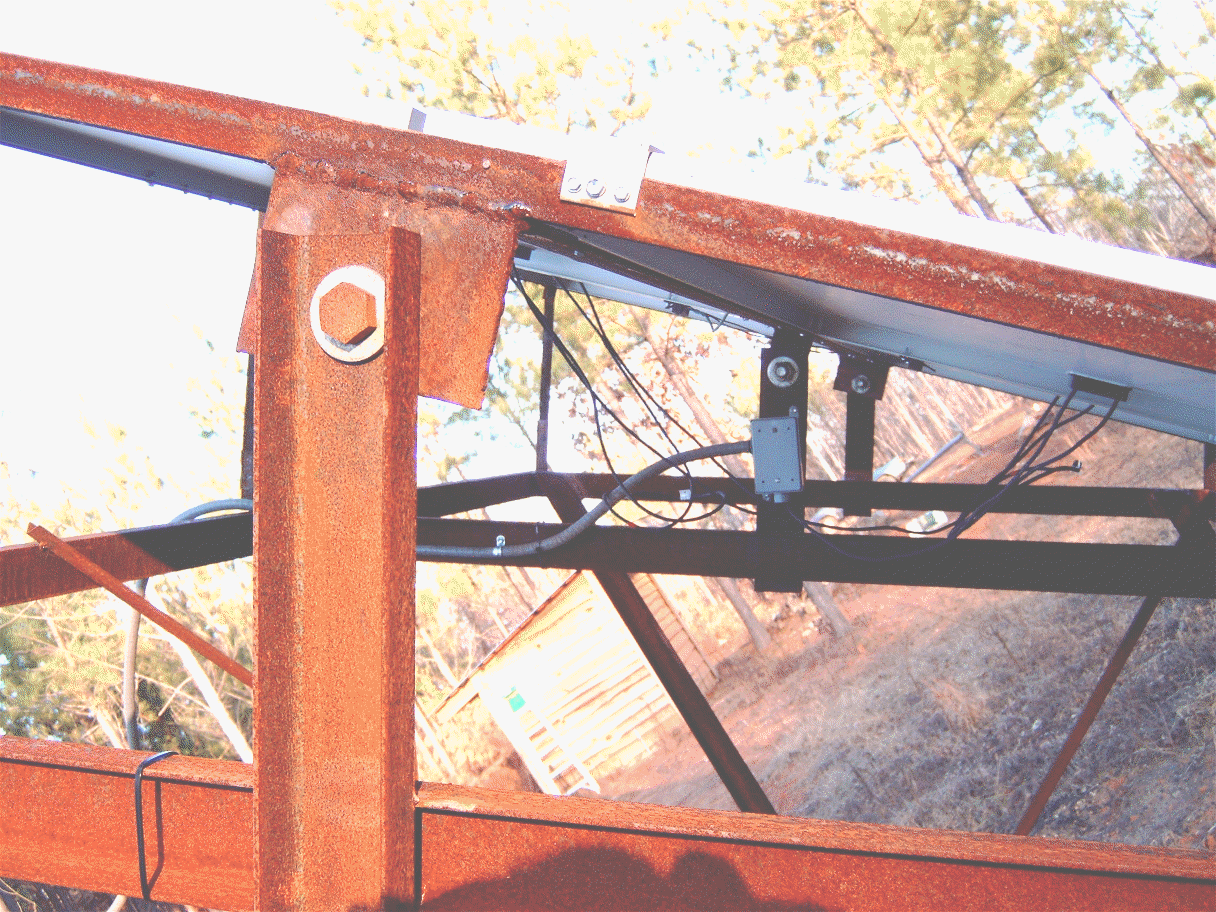
Below is a side view of the top
section.
You see three verticle peices of iron with a large bolt and washer
through each
one.
This is the hinge. One thing to note is when we made the top section to
hold the panels, we realized that the Aluminum frames of the panels
would react to the iron in the angle iron. For these metals to touch is
very bad because of corrosion. To solve this I just painted about
12 thick coats of marine paint on the insides of the angle
iron frame. This
should be enough to keep the metals from interacting. Paint was about
20 dollars. Metal to build the base and top section was free from my
Dads junk pile. If you bought the metal it would probably cost around
$200 bucks. Plus you need to know how to weld.
You may wonder why I did not install the panels on my roof. The reason
was that the my RE consultant suggested not to. He basically said
that I would be introducing holes into my roof and that I could set
myself up for leaks. Besides I had plenty of ground area to just have
them on the ground. Also since my power station is further from the
house it makes sense to have the panels near the inverters because of
DC voltage drop.
I could also forsee problems with having panels opn your roof in the
case where your roof has asphault shingles. Usually shingles have to be
replaced or just lay another layer on top about every 20 - 30 years.
Well if this is the case and you have panels installed on the roof, not
only would you need to worry about the reroofing project but you would
have another project to deal with (moving and then reinstalling the
panels and loosing backup power during that time) during the roofing
projects. My roof on my home is made of galvalume tin ( galvaized tin
and aluminum roofing tin basically - pretty thick stuff) and will not
have to be replace for probably 75 years. Thats why I went with tin and
not asphalt.
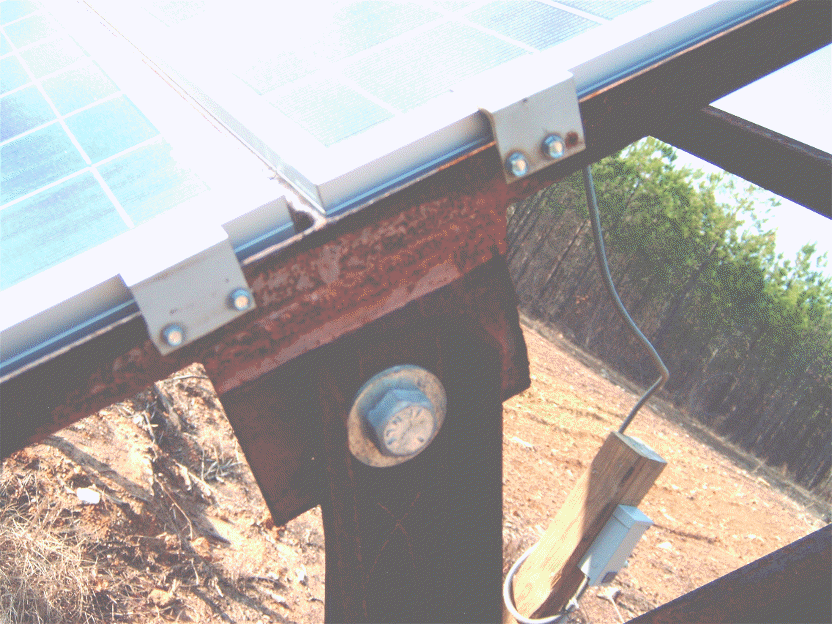
Below is the other side. Here you can see the stainless steel angle
iron used to clip the panels to the angle iron top section. Stainless
steel does not react to aluminum.
NEXT
PAGE>>>>>>
 Rockriver.us